

The short answer: FRFR stands for "full range, flat response." An FRFR cabinet is a powered speaker built to play back whatever you feed it without adding its own color, so the amp and cab sounds inside your modeler, multi-effects unit or amp sim come through the way you dialed them. It's the speaker for players who run a digital rig and need to be heard at rehearsal, on stage or in a bigger room.
The "Why Does My Tone Sound So Bad?" Moment
Anyone who has taken a digital rig from headphones to a real room knows this one. You spend a week dialing in a sound on your floor modeler, and through headphones it's huge, the kind of tone you'd swear came straight off a record. Then you bring it to rehearsal, plug into the old combo in the corner, and it turns fizzy, boxy and strangely small. Nothing on the modeler changed. The speaker did.
The other version is the first-gig question. Your whole sound lives in a multi-effects unit or on a laptop, the show is booked, and you're wondering what to plug into. Both roads lead to the same four letters.
What Does FRFR Mean?
FRFR means full range, flat response. Full range means the speaker covers close to the whole range of sound we can hear, from deep lows to the airy top end. Flat response means it doesn't boost or cut any part of that range on purpose. The goal is a speaker that plays your tone back as it is, without reshaping it.
To be honest about it, no real-world speaker measures dead flat, and your room and where you stand nudge the sound a little. "Flat" is the design goal, not a promise. What matters is that an FRFR speaker isn't built to shape your tone the way a guitar speaker is.
FRFR vs. a Traditional Guitar Cab: What's the Difference?
The traditional guitar speaker is a big part of how the electric guitar learned to sound like itself. A classic guitar cab rolls off the very top and the deepest lows and pushes the midrange forward. That isn't a shortcoming, it's the sound. The mids are where a guitar lives in a band mix, and trimming the harshest highs is a big reason a cranked amp sounds smooth and musical instead of brittle. Decades of records were made exactly this way.
Then there's the feel. A guitar cab behind you moves air, and you feel the notes as much as you hear them. Players call it "amp in the room," and it's a real thing worth loving. Plenty of us who gig with a modeler still keep a 4x12 around for exactly that reason.
An FRFR cab does a different job. It's two tools for two jobs: the guitar cab colors your tone on purpose, and the FRFR cab plays back color that's already been added somewhere else in your rig.
Why Does My Modeler Sound Fizzy Through My Guitar Amp?
Your modeler already includes the amp and the cab. The cab sim (sometimes an IR, short for impulse response) recreates what a miked guitar speaker does, trimming highs and lows and shaping the mids. When you plug that into a regular guitar amp, your sound gets shaped twice, first by the virtual cab and then by the real amp and speaker. Two layers of tone shaping stacked on top of each other is where the boxy, muddy or fizzy sound comes from.
The quick fix uses the gear you already have. If you're running into a guitar amp, turn your modeler's cab sims off and let the real speaker handle that part. Some players go a step further and run their unit into the amp's effects return, which we cover in How to Use a Multi-FX Pedal in Your Amp's Effects Loop.
The FRFR path works the other way around. Keep your cab sims on and play through a speaker that doesn't add its own color. The tone you built in headphones becomes the tone the room hears, and every amp and cab choice you made in your modeler actually counts.
Do I Need an FRFR Cab?
It depends on your rig. A floor modeler or multi-effects unit is the classic case. Your entire sound already lives in that floorboard, amp and cab included, and an FRFR cab is the most direct way to hear it out loud.
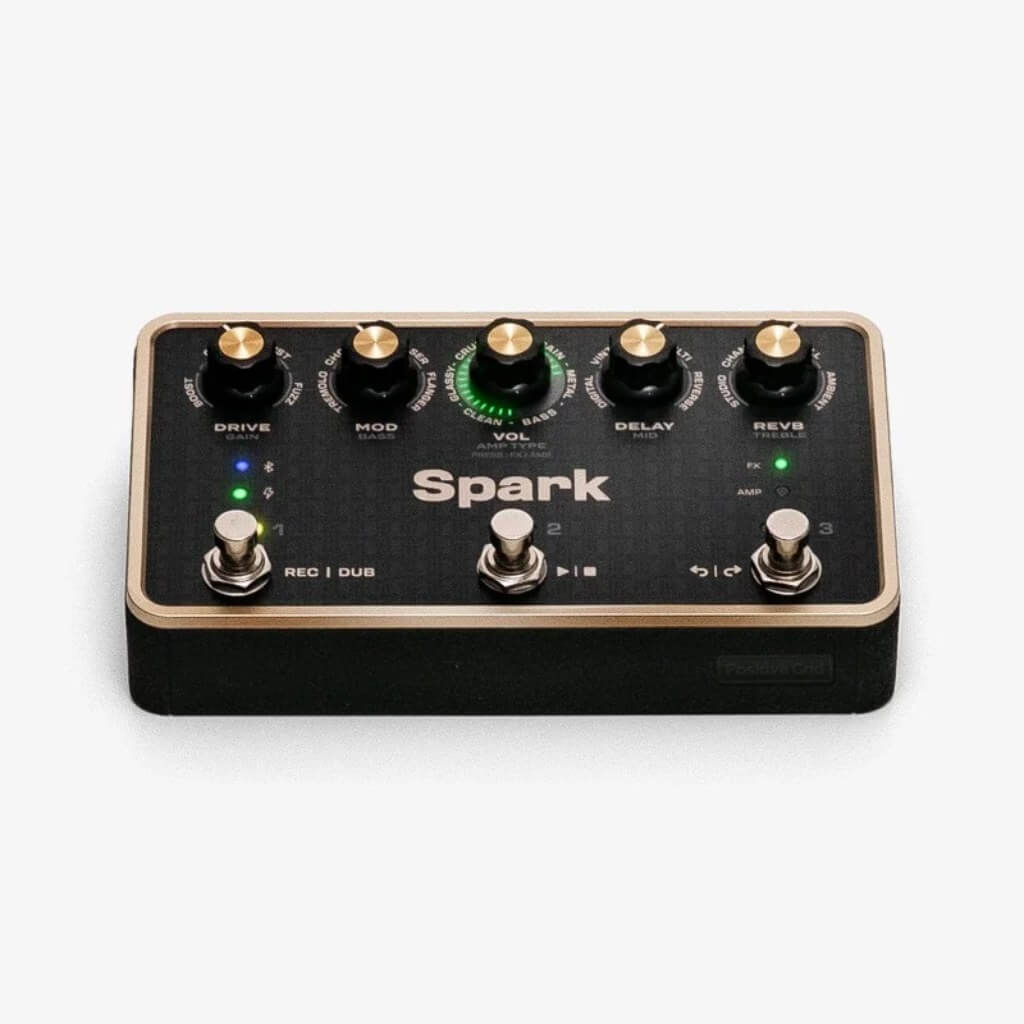
If your rig is an amp-and-effects pedal like Spark PEDAL, it's a similar story. When it's time to play somewhere louder than headphones allow, a full-range cab gives it a speaker that plays back what it sends. For more ways to take it out, see What Can You Do With Spark PEDAL? 5 Setups Every Player Should Try.
Laptop players are in the same boat. If your tone comes from amp sim software like BIAS X, an FRFR cab lets you take that sound to rehearsal or a gig without needing a full PA every time.
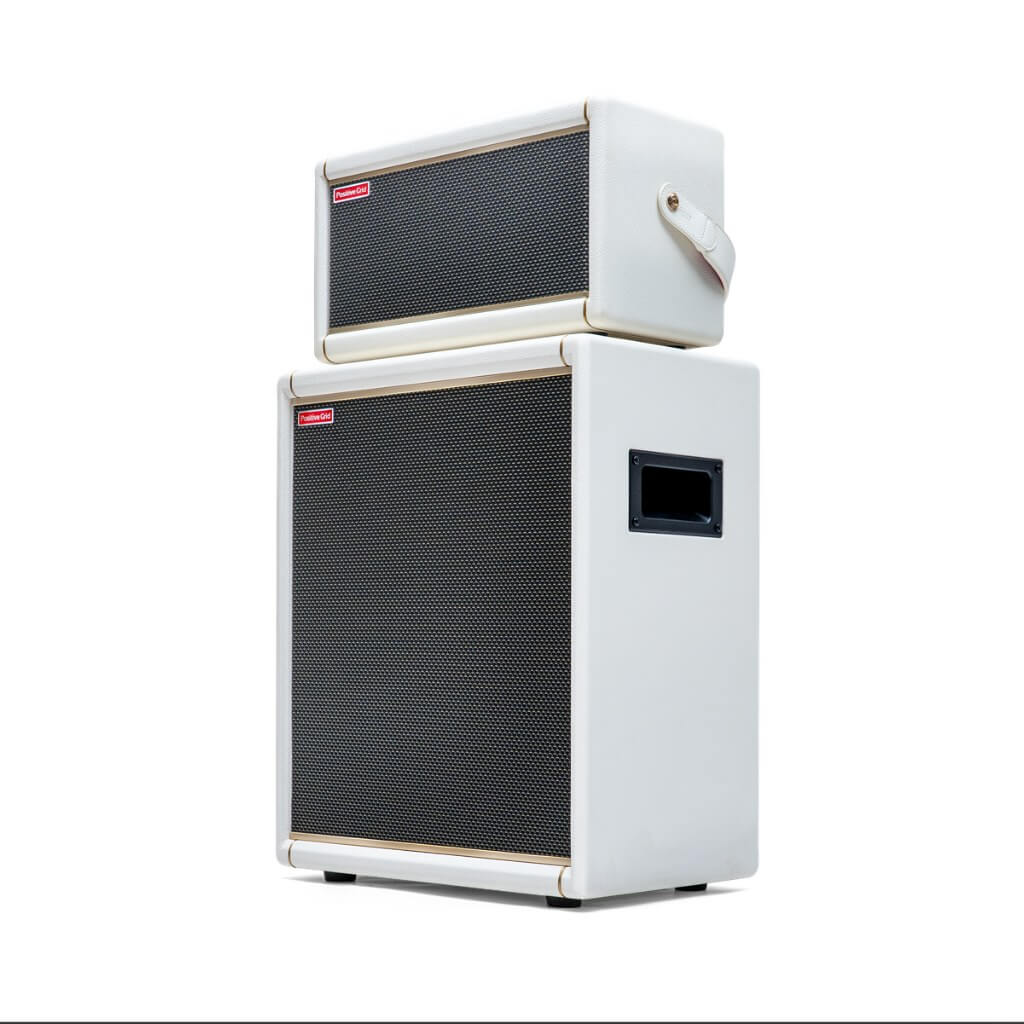
Spark owners may already know the idea without the name. Spark 2 plays through full-range speakers, and Positive Grid's Spark CAB 2 is that same idea at stage size, for when the room gets bigger than your practice space.
Because an FRFR cab isn't voiced specifically for guitar, it's also handy for acoustic, bass and keys players who want one box that handles any line-level source within its range.
And who might not need one? If you have one amp you love, you aren't running cab sims, and what you want is that amp-in-the-room feel, keep playing it. A guitar amp is the right speaker for a guitar amp sound.
FRFR vs. Guitar Cab vs. PA Speaker
Each one is best at something different.
| FRFR cab | Traditional guitar cab | PA speaker / studio monitor | |
|---|---|---|---|
| What it does to your sound | Plays back what you feed it | Shapes it on purpose, with the mids forward and the fizz trimmed | Plays back what you feed it, tuned for vocals and full mixes (monitors are tuned for close-up listening) |
| Has its own power amp? | Yes, it's powered | Usually not, it needs an amp head | PA speakers usually do, studio monitors do |
| What you plug in | A modeler, multi-effects unit, amp sim or Spark amp | An amp head's speaker output | A mixer or other line-level source |
| Cab sims on or off? | On | Off | On |
| Sounds like | The record, or the front-of-house mix | The amp in the room | The record, or the front-of-house mix |
| Acoustic, bass, keys? | Yes, within its range | Guitar only | Yes |
| On stage | Looks and sits like a guitar cab | The classic look | A PA box or wedge; studio monitors aren't built for stage volume |
How to Choose an FRFR Cabinet
- Loud enough for your room. Judge it by how loud it actually gets in a real room, not by the watt number on the box. Don't Overpay for Wattage: Introducing Spark CAB 2 has more on why wattage alone doesn't tell the whole story.
- A speaker and a tweeter for the top end. A woofer handles the body of your tone and a tweeter keeps the top end clear. Read the listed frequency range too.
- Inputs that fit your gear. XLR/TRS combo inputs take the outputs on most modelers, multi-effects units and audio interfaces.
- A line out to the PA. That way the cab works as your stage monitor while the sound person gets a clean feed.
- Separate volume for the speaker and the PA send. Turning down on stage shouldn't turn you down in the house.
- Simple controls. A low-volume switch and a ground lift solve most real problems. Your tone shaping already happens in your modeler, so you don't need a wall of EQ on the cab.
- Mono or stereo. Most players gig in mono. Stereo means two speakers, and it's worth it mainly if your sound leans on wide stereo effects.
- Size, weight and handles. You're the one carrying it to the car.
- Whether it can power the rest of your rig. Some cabs can run or charge your other gear from the same outlet, which means one less power supply to pack.
How to Set Up an FRFR Cab
The order matters, for your ears and the speaker.
- Turn cab sims on.
- Set your modeler's output to line level.
- Start with the cab volume low.
- Use the low-volume switch at home, and turn it off at gig volume.
- Send XLR to the PA. Give the sound person the line out, and keep the cab as your monitor.
- Use the ground lift if you hear hum.
Example: How Spark CAB 2 Fits the Checklist
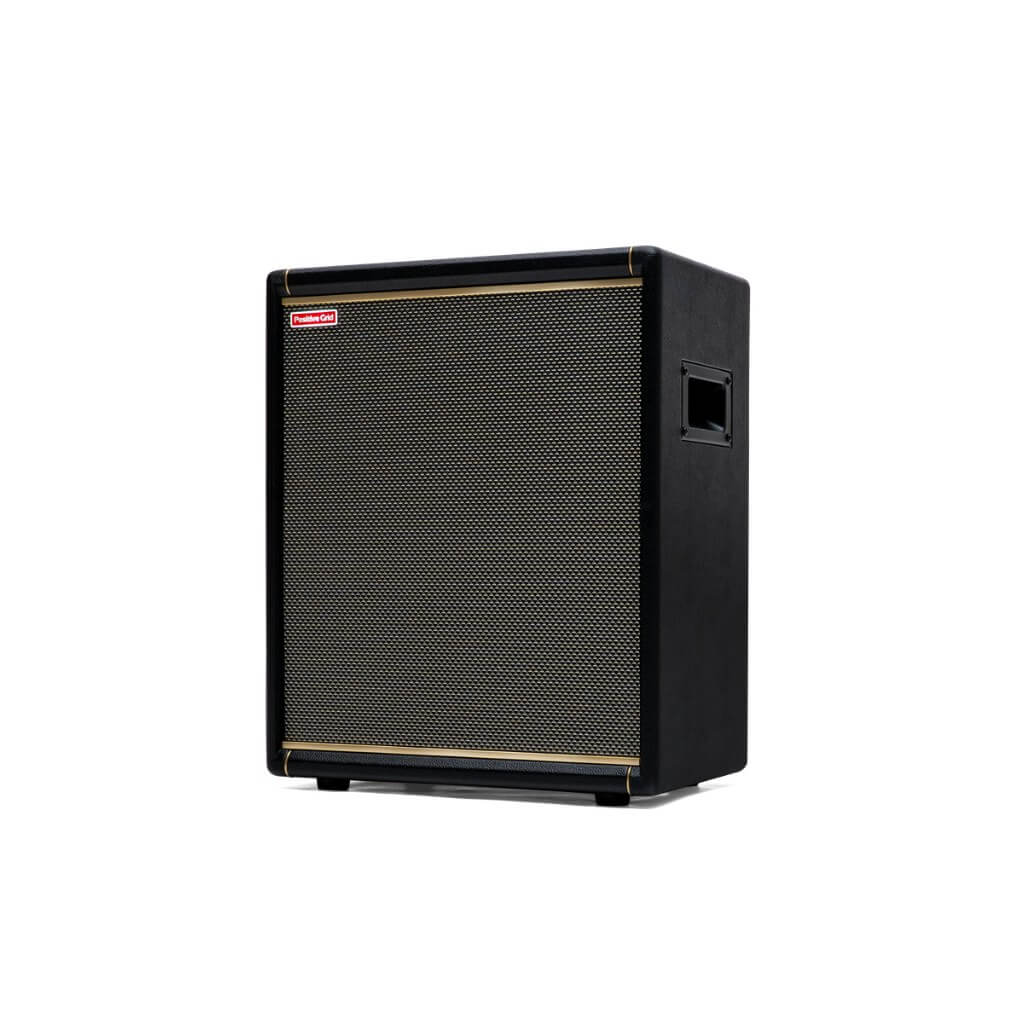
Here's how Spark CAB 2 lines up against that list. It brings 140 watts of clean, full-range power from a Class D amp and is rated up to 118 dB, plenty for home practice, rehearsal and the stage. Sound comes through a 10" woofer and two 1" tweeters covering 45 to 20,000 Hz, so the low end has body and the top end stays clear. It's designed for a flat response, with an optional Contour switch for low volume that boosts the lows and highs when you're playing quietly. Turn it off when you're at gig volume.

A 140W powered FRFR cabinet that turns any Spark amp into a full rig, and a full-range cab for any line-level modeler, pedal or amp you already play.
For inputs, there are two XLR/TRS combo inputs for modelers, amp sims, bass, keys, synths, e-drums and any other line-level source, plus a dedicated 3.5mm Spark Input with an input selector. Every current Spark amp (Spark GO, Spark MINI, Spark PEDAL, Spark 40 and Spark 2) connects through that Spark Input with the included cable, and the Spark amp's own speaker mutes by default.
A balanced XLR line out sends your sound to the PA, and Speaker Volume and Line Out Volume are separate, so you can set what you hear on stage and what the room hears independently. Spark CAB 2 is a mono cabinet with recessed side handles and a cable tie, and it comes in Black or Pearl to match Spark 2.
It can also run more of your rig from one wall outlet. The DC output powers Spark 2 or Spark 40, and the USB-C output powers and charges Spark GO, Spark MINI and Spark PEDAL. It also works as a stage monitor or straight to a PA without a Spark amp at all.
FAQ
Is an FRFR cab the same as a guitar cab?
No. A guitar cab shapes your tone on purpose, with forward mids and a rolled-off top end. An FRFR cab is designed to play back what you send it, so it pairs with a modeler that already has its own cab sims.
Do I need one for my Spark or my modeler?
For a modeler or multi-effects unit you want to hear out loud in a room, an FRFR cab is the natural fit. With a Spark amp, you need one once the room gets bigger than practice volume, like rehearsal with a drummer or a small gig.
Mono or stereo: do I need two?
Most players gig in mono, and one cab covers it. Stereo needs two speakers and is worth it mainly if your sound is built around wide stereo effects. Spark CAB 2 is a mono cabinet.
Can I use a PA speaker or studio monitors instead?
A PA speaker can work, though it's tuned for vocals and full mixes. Studio monitors are great for close-up listening at a desk but aren't built for stage volume.
Can I plug my tube amp into an FRFR cab?
No. A powered FRFR cab is made for line-level sources, not the speaker output of a tube or traditional amp head. Plugging an amp head's speaker output into it risks damaging both. If you love your tube amp, play it through a guitar cab.
Keep Going
- Spark CAB 2: What's New and Who It's For for what changed and which players it suits.
- Which Spark Amp Is Right for You? if you're still picking the amp to pair with it.
- How to EQ Your Guitar for Live and Studio Sound for getting your modeler tone to sit in a mix.
Hear One for Yourself
The best way to understand FRFR is to hear your own rig through one. Bring it to a music shop near you to try one in person, or head to the Spark CAB 2 page for the full details. You can see everything else we make at Positive Grid.