

The short answer: a first guitar amp has three jobs. It should sound good at bedtime volume, be simple enough that nobody needs the manual, and make practice feel like playing music. For a beginner at home, watts matter much less than you'd think. For most houses, Positive Grid's Spark MINI is the easy start, and Spark 2 is the one to grow into.
Small room, or it moves around: Spark GO or Spark MINI
Wants room to grow: Spark 2
Plays acoustic or bass: Spark 2 or Spark MINI
Quiet house: Spark NEO
The guitar is wrapped and hidden in the closet. You felt good about it for about a day, and then someone asked the question: "What about an amp?" Now you have twelve tabs open, all talking about watts and modeling like you already know what those mean.
You don't need to become a gear expert. You just need to know what a first amp actually has to do, which kind fits your house, and what else goes in the box. This guide is written for the person buying the amp, not the person playing it.
Does an electric guitar need an amp?
Yes. An electric guitar is very quiet on its own, because it has no hollow body to push the sound out. An acoustic guitar doesn't need one at all. If the acoustic has a pickup (a small jack near the strap button is the giveaway), an amp makes it louder, but it's optional. A bass needs one too.
What to look for in a beginner guitar amp
A good first amp does five things.
It sounds good quietly. Most beginner practice happens in a bedroom, and some amps only sound good turned up. Look for an amp that's made to sound full at home volume.
It has a headphone option. A headphone jack means they can practice at 10 pm without the whole house hearing every attempt at the same riff. It's the single most useful feature for a family home.
It works with their guitar. Most amps are built for electric guitar. If they play acoustic or bass, or might switch later, check that the amp handles those too.
It's easy without a manual. If setting it up feels like work, the guitar stays in its case.
It makes practice fun. Practice that sounds like music gets repeated. Practice that sounds like homework gets skipped. Amps that let them play along with songs they love make a real difference here.
How many watts does a beginner amp need?
For home, fewer than you'd think. Watts measure power, not quality, and even a small amp has more than enough volume for a bedroom or a living room.
Watts start to matter when other loud instruments join in. A drummer is the real test: a drum kit is loud, and to be heard over one, a guitarist needs a bigger amp with more power and a bigger speaker. If they're learning at home, choose by the checklist above.
Types of beginner guitar amps, compared
A beginner is likely to end up with one of five kinds of amp. None is wrong, and each is best at something different.
| Basic practice amp | Spark GO / Spark MINI | Spark 2 | Spark NEO (headphones) | Big tube or traditional amp | |
|---|---|---|---|---|---|
| Sounds good at bedtime volume? | Depends on the amp | Made for small rooms and desks | Made for playing at home | Only the player hears it | Sounds its best turned up |
| Can they practice silently with headphones? | Usually; check for a jack | Yes, headphone out | Yes, headphone out | It is the headphones | Some can, many can't |
| Works with electric, acoustic, bass? | Usually electric only | Spark MINI: all three. Spark GO: electric and bass | All three | All three | Mostly electric |
| Easy to set up without knowing gear? | Yes, a few knobs | Yes, plug in and play | Yes, plug in and play | Yes, plug in the transmitter | Yes, but it's loud |
| Play along with their favorite songs? | Rarely | Yes, over Bluetooth® | Yes, over Bluetooth® | Yes, over Bluetooth® | Rarely |
| Fits on a desk / moves room to room? | Usually | Yes, easily | Fits on a desk or shelf | They wear it | No, it's big and heavy |
| Runs on battery? | Rarely | Yes, built in, up to 8 hours | Optional Spark Battery (sold separately), up to 12 hours | Yes, rechargeable | No |
| Grows with them past year one? | Covers the basics | Yes, through the free app | Yes, lots of room to grow | Yes, through the free app | Yes, for years |
| Needs a phone or tablet? | No | Only for new sounds and play-along | Only for new sounds and play-along | Only for new sounds and play-along | No |
| Built for band practice? | No | No | No, it's a home amp | No | Yes, this is its job |
A basic practice amp is a small box with a speaker and a few knobs. Spark GO, Spark MINI and Spark 2 are smart amps that work with a free phone app, Spark NEO puts the whole amp in a pair of headphones, and a big tube or traditional amp is the kind you see on stage.
Where a big amp wins
Big amps are wonderful. A tube amp turned up in a rehearsal room has a feel that players chase for their whole lives. The sound pushes back, the notes bloom, and the guitar seems to respond to every little change in how hard they pick.
Where a big amp shines is band rehearsal, gigs, and playing loud enough to keep up with a drummer. Where it struggles is a bedroom at 9 pm, because it likes to be turned up and it doesn't fit on a desk.
So think of a first amp as the first tool in the toolkit, not a side to pick. Most players end up owning more than one kind of amp. They start with something that works at home, and when the band starts, a bigger amp joins it. Both get played.
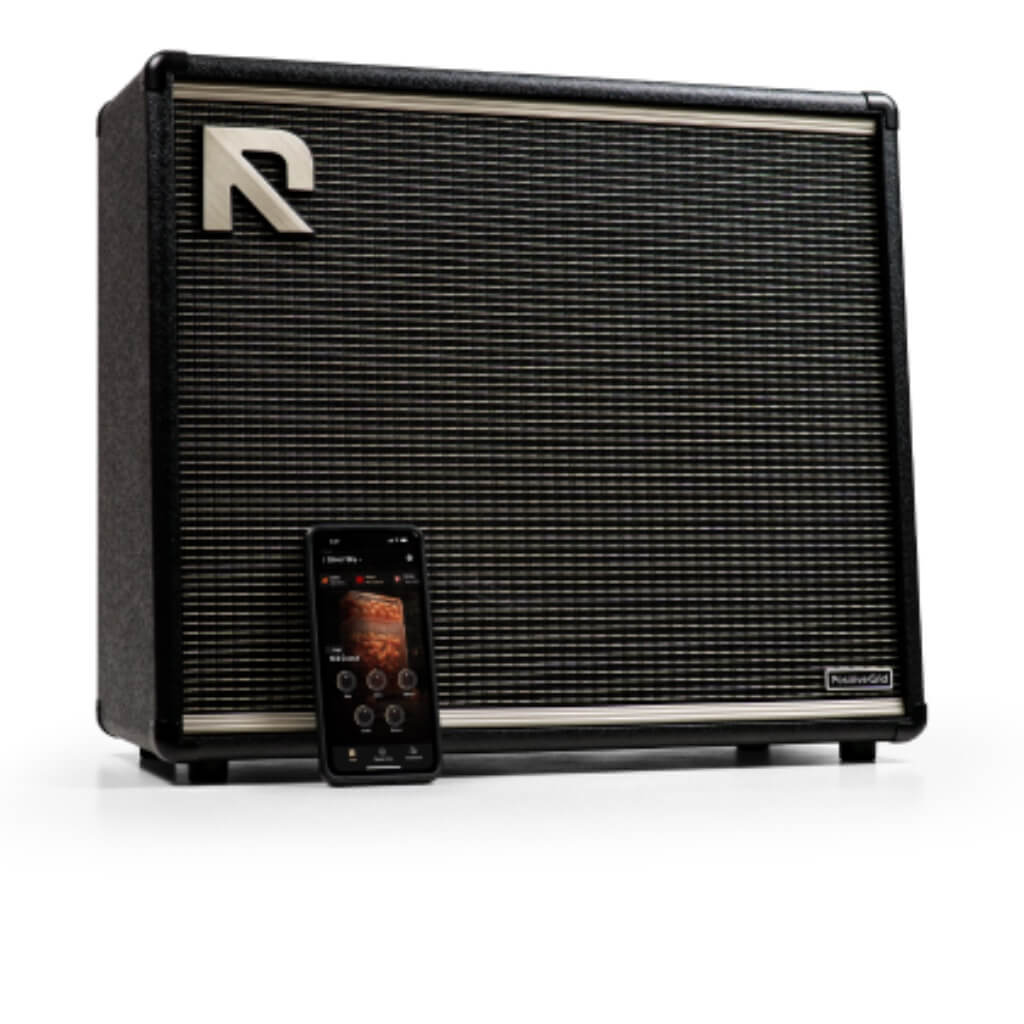
If they're already serious and the band is forming, our REACTOR is an intelligent amp built on Amp Intelligence™, made for the rehearsal room and the stage.
The best beginner guitar amp for your situation
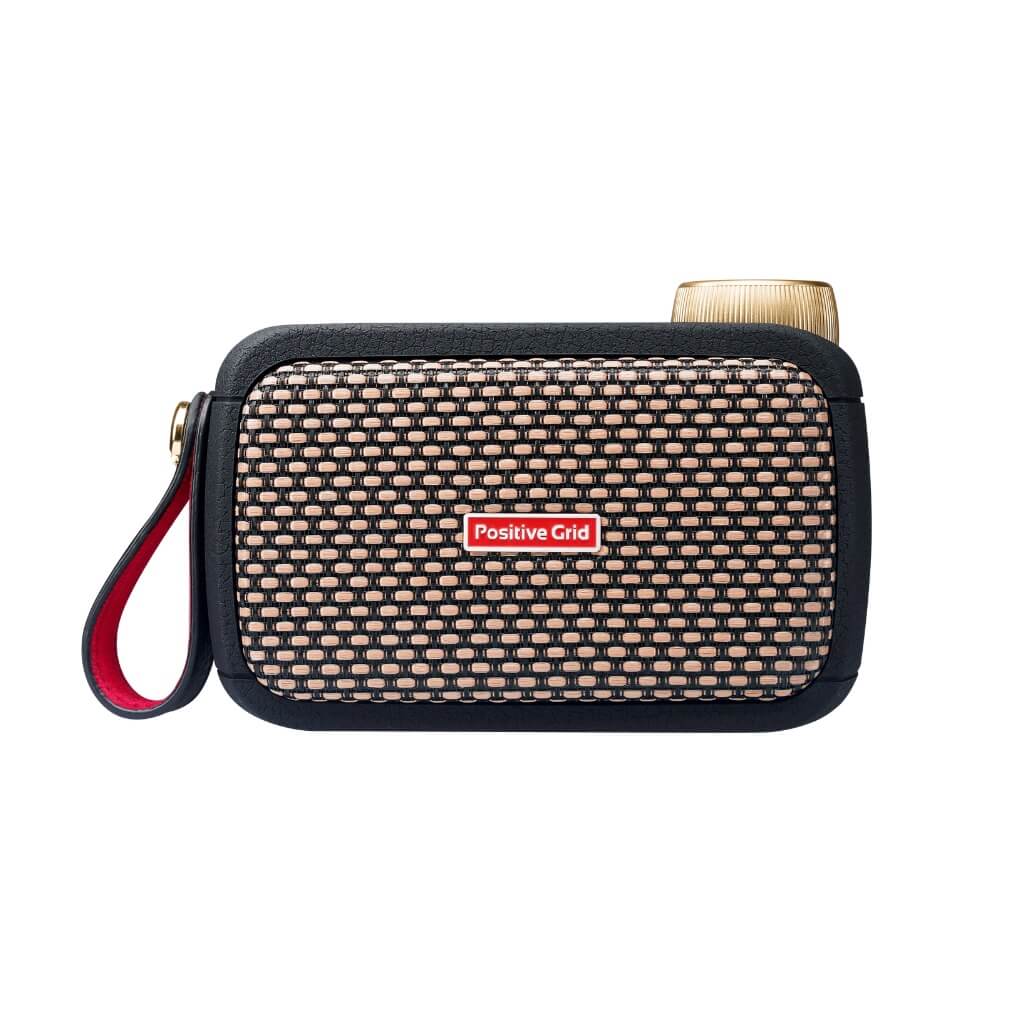
If the amp moves from room to room, or space is tight: a small smart amp. Spark MINI and Spark GO both run on a built-in rechargeable battery for up to 8 hours, so it can follow the player around the house without hunting for an outlet.
If they're serious about learning and want room to grow: Spark 2. It's the bigger step, a smart amp built to be the main amp in the house.
If they started on acoustic or bass: Spark 2 or Spark MINI. Both handle electric, acoustic and bass, so either is a good beginner bass amp for home, and it still works if they switch instruments.
If you share walls, or practice happens late: Spark NEO, or the headphone out on any of these amps.
Spark MINI is the easy start, small enough for a desk or a nightstand, with angled stereo speakers that sound full. Spark 2 is the bigger step for a player who's already hooked: richer, more detailed sound, 8 onboard presets for switching sounds without a phone, and over 100,000 tones on ToneCloud, the free library of sounds players share in the Spark app.


What they need to work: a guitar and a guitar cable. Spark MINI charges over USB, and Spark 2 comes with its power adapter. Neither needs a phone to play.
For the smallest space, or an amp that travels

Ultra-portable smart guitar amp and Bluetooth® speaker.
Spark GO is about 3.5 inches high, small enough to live on a bookshelf or ride along in a backpack. It has a headphone out and works as a Bluetooth® speaker. Four presets on the amp itself mean they can switch between favorite sounds without picking up a phone.
What it needs to work: an electric guitar or a bass, and a guitar cable. It charges over USB-C, and it plays without a phone.
For the house that needs quiet

Wireless smart guitar headphones, transmitter included.
Spark NEO is a pair of wireless guitar headphones with the whole amp built in. A small wireless transmitter plugs into the guitar, they put the headphones on, and they play with full sound in their ears while the rest of the house hears nothing but the strings. It works with electric, acoustic and bass, the ear cups block out the room around them, and when practice is over it doubles as Bluetooth® headphones for music.
What it needs to work: a guitar with an output jack. The wireless transmitter comes in the box.
How to help them stick with it
The worry every parent has is the guitar gathering dust in March. Sticking with it has more to do with a few easy habits than with talent.
Short sessions beat long ones. Fifteen or twenty minutes most days does more than two hours on a Saturday. Songs they love beat exercises they don't, so let them learn the music they actually listen to, even if it's simple. Tuning up every time matters, because an out-of-tune guitar sounds wrong even when they play it right. And lessons, whether in person or online, give them a plan and someone to show off to.
This is where a smart amp earns its spot. With any of these Sparks, they can play along with their favorite songs over Bluetooth®. The song plays through the amp, and they play right along with it. Practice stops sounding like practice and starts sounding like the band they're listening to. Less hassle means more playing, and more playing is the whole game.
There's another reason a smart amp suits a beginner. Every Spark comes loaded with amps and effects, so they can try a clean sound, switch to a crunchy one, then stack an effect on top and hear what it does, all from their bedroom. They learn how amps and pedals work just by playing around, at their own pace, with no shelf of gear to buy first.
The free Spark app on their phone or tablet adds a few more helpers. There's a built-in tuner and metronome, so tuning up takes seconds. Quick Jam plays a drum-and-bass groove with a chord chart to follow, so they can practice changing chords with a band behind them. Smart Jam builds a backing track from what they play. And Spark AI (Beta) lets them describe a sound in their own words and get tones to match.
Free for every Spark: a tuner, a metronome, Quick Jam and Spark AI (Beta).
What else they need to start playing
A guitar cable connects the guitar to the amp (check the amp's box contents, since this is the one people forget). A tuner, either a clip-on or the one in the Spark app. A handful of picks, because they disappear. A strap, so they can stand up to play. A stand, because a guitar on a stand gets picked up and a guitar in a closet mostly doesn't. Headphones, if the house needs quiet. And lessons, which might be the best gift of all.
For more, see our guide to the guitar accessories every player needs or our gift guide for guitar players.
FAQ
Should I buy a guitar-and-amp starter kit or a separate amp?
A starter kit is the easiest one-box option. The trade-off is that the amp in most kits is a basic practice amp. If you already have the guitar, or want an amp that ticks the checklist above, buying the amp separately gives you more choice. You can also browse our beginner collection.
Will a beginner amp work with an acoustic guitar or a bass?
It depends on the amp. Spark 2, Spark MINI and Spark NEO all work with electric, acoustic and bass. An acoustic needs a pickup (a jack on the body) to plug in. Without one, it doesn't need an amp at all.
Do they need a phone or the app to use it?
Not to play. They can plug in and play right away. The free Spark app on a phone or tablet is how they get new sounds, play along with songs, and use the tuner and the other practice tools.
Should a beginner get a tube amp or a modeling amp?
For a first amp at home, a modeling amp (an amp that recreates many different amp sounds digitally, like the Spark amps) is usually the easier start: it sounds good quietly, it's light, and it has a headphone option. A tube amp is a wonderful thing once they're playing loud with a band.
Will they outgrow a beginner amp?
Most players don't outgrow their first amp so much as add to it, and a smart amp keeps growing with them, since new sounds keep arriving through the free app. Still deciding? Our Which Spark Is Right for You? guide walks through the lineup.
Still not sure?
- Want a quick answer: try the Spark product selector. A few questions point you to the right amp.
- Want to hear one first: try a few in person at a music shop near you.
- Comparing amps for a more experienced player: read our guide on how to choose the best guitar amp for you.